Top Signs You Need Garage Door Service — Don’t Ignore These
The grinding sound your garage door makes when it’s cold isn’t the door “warming up” — it’s a dry torsion spring dragging metal against metal, and every cycle it does that is shortening the spring’s remaining life by a measurable amount. Many homeowners in Vermilion learn to tune out these subtle cues, attributing them to normal wear and tear. Unfortunately, these small signals are often the early warnings of larger, more expensive problems brewing beneath the surface. Ignoring them can turn a simple $80 fix into a $400 repair bill.
Listen Closely: The Acoustic Clues to a Failing Garage Door
Your garage door is a complex system of moving parts, and its sounds tell a story. A healthy garage door operates with a smooth, consistent hum. When you start hearing new noises, it’s your cue to pay attention. The first sound many people notice is a grinding or scraping noise, especially when the door is in motion. This often points to issues with the rollers or tracks. If the rollers are dry, damaged, or have come off their track, they’ll create friction and that unpleasant sound. In Vermilion, we see this frequently during colder months when lubrication can stiffen. Another common sound is a loud squeaking or creaking, which typically indicates a need for lubrication on the hinges, springs, and rollers. While this might seem minor, a lack of lubrication can lead to increased wear on other components, including the opener motor. We’ve also diagnosed doors with a distinct clicking sound, which could signal a problem with the opener’s internal gears or even a worn-out drive chain. Finally, a sudden, loud bang or pop usually means a spring has broken. This is a critical safety issue and requires immediate attention. Don’t let these sounds become the soundtrack to a major breakdown; addressing them early saves you time, money, and potential safety hazards right here in Vermilion.
The Slow-Close Symptom: More Than Just an Opener Glitch
You might notice your garage door opener struggling to lift the door, or the door closing slower than it used to. Many homeowners immediately blame the opener motor. However, in a significant number of cases, especially in older homes around Vermilion, this slow-close symptom isn’t about the opener itself but rather about increased friction elsewhere in the system. The tracks and rollers are prime suspects. If the tracks are bent, misaligned, or obstructed by debris, they create resistance that the opener has to fight against. Similarly, if the rollers are worn out or have started to seize up, they won’t glide smoothly, adding strain. This friction forces the opener motor to work harder, leading to premature wear and tear. It’s a bit like trying to push a heavy box with sticky wheels – it takes a lot more effort. If your door works perfectly fine when you manually operate it (without the opener), but the opener struggles, it’s almost always a balance and friction issue, not a motor failure. Replacing the opener without addressing the underlying friction problem is like putting a new engine in a car with flat tires – the problem will persist, and you’ll have wasted money. We often find that a good cleaning, lubrication, and potentially replacing a few worn rollers can restore smooth operation and take the strain off the opener. This is a common issue we resolve for homeowners in areas like Oakwood and Sheffield Lake.
The Manual Door Test: Why It Matters for Your Opener
A crucial diagnostic step that many people overlook is the manual operation test. If your garage door opener seems to be struggling, or if you’re experiencing slow movement, the first thing we recommend is disengaging the opener and trying to lift the door by hand. A properly balanced garage door should feel relatively light and easy to lift, moving smoothly through its entire range. If you can easily lift the door manually, but the opener struggles significantly, it strongly suggests an issue with the door’s balance or an increase in friction within the tracks or rollers. This is a critical distinction because replacing the opener motor when the real problem lies with the door’s balance or a worn-out spring system is a common and costly mistake. When a door is out of balance, it puts immense stress on the opener. Think of it like this: the opener is designed to assist the door’s natural movement, not to do all the heavy lifting against a significant imbalance. If you pull the manual release and the door feels excessively heavy, or if it stays put when you let go (instead of holding its position), the springs are likely failing or have broken. This imbalance is also a major contributor to opener wear. We see this often in Vermilion homes where the original springs have simply reached the end of their lifespan after years of service. Addressing the door’s balance and ensuring smooth track operation is paramount before even considering an opener replacement.
Visual Gaps and Imbalances: What Your Closed Door Tells You
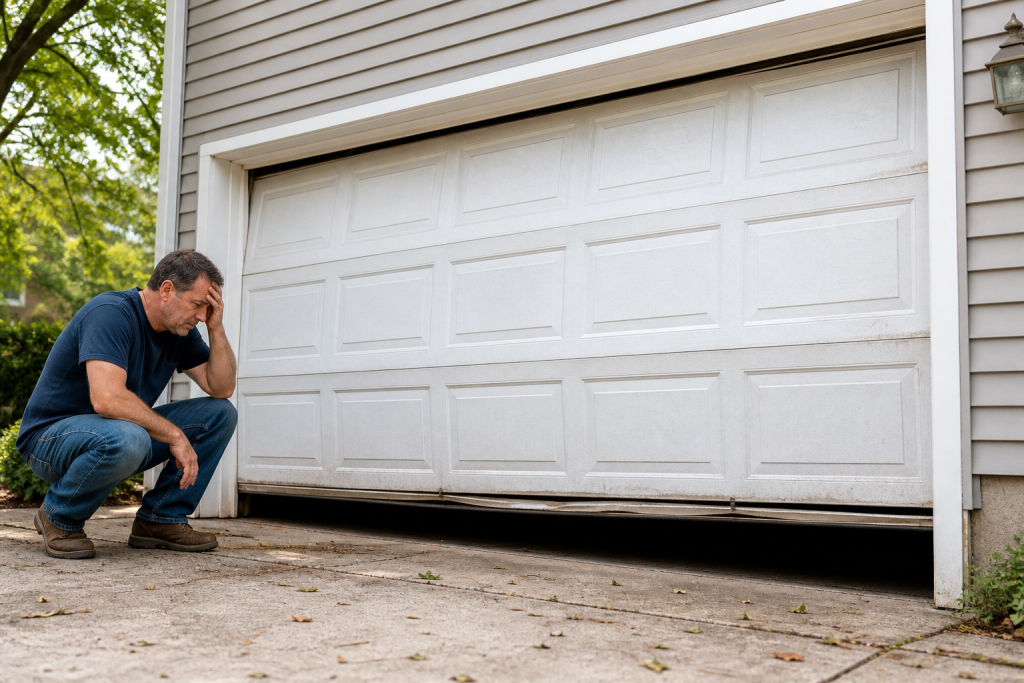
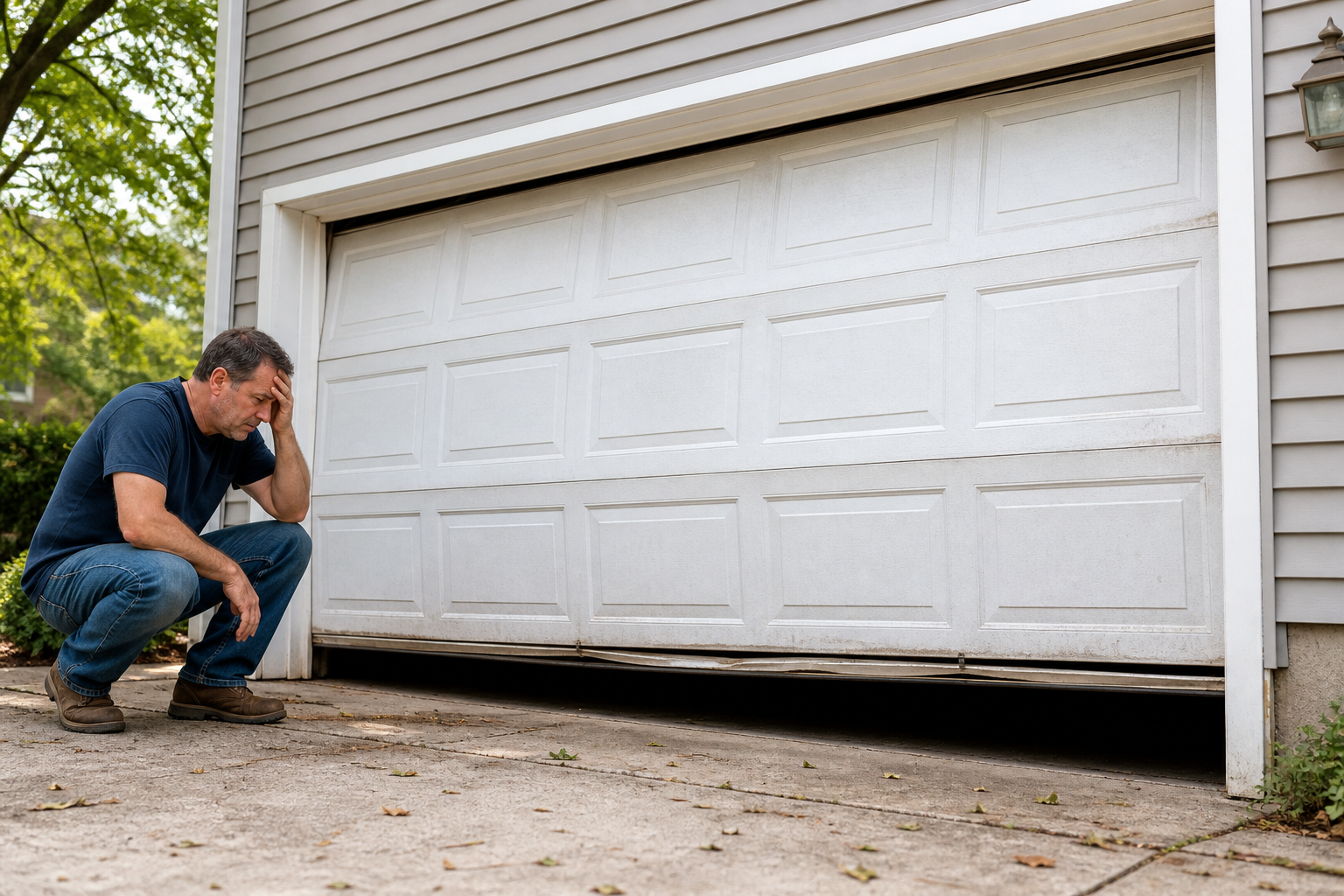
When your garage door is fully closed, it should create a tight seal along the bottom. Take a moment to look for any uneven gaps between the bottom of the door and the garage floor. If you notice a significant gap on one side, or if the door appears to sit unevenly, this is a strong indicator of a problem with the lift cables or the torsion springs. These components are responsible for the door’s balance. If one cable is looser than the other, or if a spring is weakening or has broken, it will cause the door to hang unevenly. This imbalance doesn’t just make your garage look a little off; it puts tremendous strain on your garage door opener. The opener has to constantly work against this uneven pull, leading to faster wear and tear on its motor and internal components. Over time, this can cause the opener to malfunction or fail prematurely. In areas like Amherst and Lorain, where we see a lot of older homes, this type of visual imbalance is a frequent culprit behind opener issues. It’s also a potential security concern, as an uneven seal can allow pests or drafts to enter your garage. A simple visual inspection can alert you to a problem that, if left unaddressed, could lead to more significant damage and costly repairs.
The Monthly Safety Test: Preventing Dangerous Auto-Reverse Failures
Modern garage doors are equipped with a vital safety feature: the auto-reverse mechanism. This system is designed to detect an obstruction in the door’s path and immediately reverse its direction, preventing injuries or damage. However, this feature can fail if not properly maintained, and a malfunctioning auto-reverse can turn a simple door operation into a dangerous situation. Every homeowner should perform a quick safety test once a month to ensure this critical system is working. To do this, place a 2×4 piece of lumber or a sturdy cardboard box flat on the ground directly in the door’s path as it’s closing. When the door makes contact with the object, it should automatically reverse and begin opening. If the door continues to close and pushes the object, or if it doesn’t reverse at all, the auto-reverse sensor is not functioning correctly. This is a serious safety hazard, particularly if you have children or pets who frequently play near the garage. Issues with the sensors, the opener’s internal logic board, or even misaligned safety eyes can cause this problem. We’ve seen situations in Vermilion where a seemingly minor issue with the safety sensors has gone unnoticed for too long, leading to near-miss accidents. It’s a simple test that can prevent a potentially devastating outcome. If your door fails this test, it’s imperative to call a professional immediately to diagnose and repair the system.
When to Call a Pro
While some minor maintenance, like lubrication, can be a DIY task, there are clear indicators that it’s time to call in the experts. If you hear loud bangs, grinding noises that don’t go away with lubrication, or if your door feels excessively heavy when operated manually, it’s a sign of a serious issue, likely with springs or cables, that requires professional attention. Likewise, if your door fails the monthly safety test, or if the opener is struggling despite smooth manual operation, it’s time to seek expert help. Don’t risk injury or further damage by attempting repairs on critical safety components or balanced systems yourself. For residents in Vermilion and the surrounding communities, Prime Garage Door Repair Vermilion is here to help.
The Bottom Line
Paying attention to the subtle signs your garage door is giving you is crucial for preventing minor issues from escalating into major, expensive repairs. From the sounds it makes to how it moves, your garage door is constantly communicating its health status. Ignoring these signals can lead to unexpected breakdowns and safety hazards. If you’re hearing unusual noises, noticing slow movement, or suspect a problem with your door’s balance or safety features, don’t wait for a complete failure. For homeowners in Vermilion looking for reliable and expert service, Prime Garage Door Repair Vermilion offers free estimates and can diagnose and resolve any of these issues efficiently. If you’re in Vermilion and need help, Prime Garage Door Repair Vermilion offers free estimates — call (567) 234-5197.
Frequently Asked Questions
A broken garage door spring typically makes a loud “bang” or “pop” sound when it breaks. You might also notice the door suddenly becoming very heavy and difficult to lift manually, or the opener struggling significantly to open it. If you suspect a broken spring, it’s essential to stop using the door and call for professional service immediately, as broken springs are under extreme tension and can be dangerous.
A slow-closing garage door is often not an opener problem, but rather an issue with friction in the tracks or rollers, or a problem with the door’s balance due to failing springs or cables. These factors force the opener motor to work harder. If the door operates smoothly manually but is slow with the opener, we recommend a professional inspection of the tracks, rollers, and spring system. Call (567) 234-5197 for an exact quote — estimates are free.
Yes, basic lubrication of hinges, rollers, and tracks can often be a DIY task. Use a silicone-based lubricant or a white lithium grease spray, and apply it sparingly. However, avoid lubricating the spring itself, as this can actually be counterproductive. If you’re unsure about what to lubricate or if lubrication doesn’t solve squeaking or grinding noises, it’s best to call a professional. For an exact quote on lubrication services or other maintenance, call (567) 234-5197 — estimates are free.
We recommend testing your garage door’s safety reversal feature at least once a month. This simple test involves placing a 2×4 or a sturdy cardboard box on the ground in the door’s path as it closes. The door should automatically reverse upon contact. If it doesn’t, or if it continues to push the object, the safety system needs immediate attention. Call (567) 234-5197 for an inspection and to ensure your system is functioning safely — estimates are free.
Reviewed by Anthony Williams, Owner & Lead Technician at Prime Garage Door Repair Vermilion, serving Vermilion since 2011.
Need Garage Door Help?
Call Prime Garage Door Repair Vermilion — licensed & insured, here with fast after-hours help in Vermilion.
(567) 234-5197